AI governance that keeps the person in the record.

5Q Health helps rural and safety-net organizations, and the counsel who work with them, govern the automated systems that now decide who gets covered, what gets approved, and how claims are paid. We look at how current automated systems are trained to practice, and at what must be documented to answer their decisions.

Our clinical roots are in complex rehabilitation technology and assistive technology. The method applies wherever an automated system makes a decision about a person’s care: prior authorization, Medicaid eligibility, claims payment, and the adoption, purchase, and use of medical devices.

Accountable AI. Human Healthcare. Governance as Infrastructure.

New · September 28, 2026WISeR at Nine Months: What the Records Show →

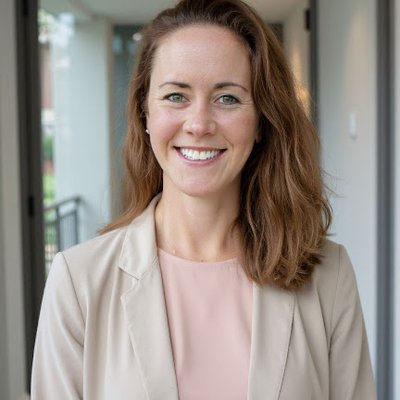
Tabatha James, founder of 5Q Health

I’m Tabatha James. For more than a decade I worked alongside rural and under-resourced Medicaid patients in Illinois and Tennessee, getting people the wheelchairs, equipment, and care they needed. Over those years, automated denials delayed or blocked more and more of that care. Now I help rural health organizations govern the AI that makes those decisions.

AIGP · OTR/L · RESNA ATP/SMS · Master of Legal Studies (MLS), Health Law and Policy, Wake Forest Law (expected December 2027)More about Tabatha →

Start where you stand
Rural & safety-net organizationsAI and data governance sized for FQHCs, CAHs, and the Hubs that support them. Counsel, in-house or retainedClinical, functional, and governance analysis that informs counsel’s advice. Clinicians & educatorsWhat automated review reads, and how to document function. Suppliers & providersThe denials are automated. Your response can be governed. Patients & familiesKeep the coverage you still qualify for. Free.
What we do

Three ways 5Q works.

Start wherever your exposure is.

For suppliers & providers

Protect reimbursement

The complex claim is the path of least resistance to deny.

See diagnostic, build & advisory packages →
For payers, health systems & AI vendors

Build & operate AI governance

The operational layer auditors and regulators actually examine.

See AI Governance Operations →
For everyone exposed to algorithmic adjudication

Track the landscape

Independent, confidence-scored regulatory intelligence.

Explore the tools & analysis →
Run an FQHC, Critical Access Hospital, rural clinic, or a Hub that supports them? See the RHTP Governance Partnership.
The name is the method

Five questions, one person at the center.

“5Q” comes from the Five Whys, the root-cause method healthcare quality teams use to trace a problem past its symptoms.

The fifth question

Data governance asks four questions of every system: Is it legal? Is it ethical? Is it a good idea? How do we know, and who decides? The fifth comes from occupational practice: who does this help participate, and who does it leave out?

Services

Fixed fee. Scoped in writing.

Rural & safety-net

RHTP Governance Partnership

Grant and pass-through funded

Vetting AI tools before you adopt them, and keeping your data and reporting defensible so your funding stays protected.

Providers & suppliers

Denials & documentation

From $3,500

Find where automated review threatens your revenue, then build the appeals and documentation readiness to answer it.

Health systems, payers & vendors

AI Governance Operations

From $18,000

An AI inventory, risk tiering, and audit-ready evidence aligned to NIST, ISO/IEC 42001, and HIPAA.

See all services and how an engagement works →

Working tools

For organizations and the people they serve.

Free and private: everything runs in your browser.

For suppliers & providers

The 2029 Convergence Calculator

Model your North Carolina Medicaid equipment revenue exposure when the rate floor expires in 2029.

Run the calculator
For families & beneficiaries

Coverage Keeper

A plain-language checklist for families facing the January 2027 Medicaid work rules, with an hour log and free help.

Open Coverage Keeper
For organizations deploying AI

RUAIH Readiness Scorecard

A self-assessment against Joint Commission’s Responsible Use of AI certification. Joint Commission accreditation is not required.

Open the Scorecard overview
For rural health leaders

Rural AI Readiness Check

Seven plain questions for leaders considering an AI tool, with a readiness result and a to-do list.

Start the check
For everyone watching the infrastructure

GDAC Watch

Tracks North Carolina’s funded data and AI programs in public benefits, verified against the enacted budget.

Open GDAC Watch
Analysis library

Versioned findings, on the record.

WISeR at Nine Months: What the Records Show
Medicare’s AI prior authorization pilot after the September 2026 FOIA release: response times, the vendor quality-score adjustment, launch readiness in Ohio, a corrected denial count, and status in all six states.
HIGHMEDLOWFLAG
Published September 28, 2026 · Builds on the six-month analysis (v1.0 June 2026; v1.1 July 2026) · Every finding confidence-rated · Three-pass validation · Sources documented

Read the latest analysis

Versioned, dated, and confidence-rated, to the same standard as client work.

Read the nine-month update

Earlier in the series: The WISeR Model at Six Months →

Discuss these findings →

Also in the library: Why Software Vendors Can’t Audit Their Own AI →

From the Privacy Series: WOPR Is a Privacy Law →

North Carolina: The 2027 work requirement and medical frailty → · RHTP Governance Partnership →

Primary sources: The Reading Room →

About

Built where person-centered care, data, and law meet.

Tabatha James founded 5Q Health after more than a decade of front-line, client-centered clinical care, trained in occupational therapy, with rural and under-resourced Medicaid patients in Illinois and Tennessee. From 2019 she specialized in complex rehab technology, first evaluating people for wheelchairs and seating and later working on the supplier side, during the years when automated prior authorization and denials expanded.

The lens is occupational justice, a principle from occupational therapy: everyone has a right to take part in the everyday activities that give life meaning — working, caregiving, getting around, living at home. When an automated system decides coverage, payment, or whether a person gets the medical device or assistive technology they need, that right can be lost at scale. 5Q Health helps rural and safety-net organizations govern those systems, working alongside their counsel.

5Q Health is based in Henderson County, North Carolina, where Tabatha grew up and has returned home.

How we work. 5Q Health aims to be nonpartisan and useful to the largest number of people, while paying attention to smaller populations that research often misses. It serves people affected by automated decisions and the organizations responsible for them. Opinions follow the evidence and do not depend on who retains us or how a matter ends. Analyses are dated, versioned, and rated HIGH, MED, LOW, or FLAG for confidence, and each is checked in three passes. 5Q Health is not a law firm and does not give legal advice; it works alongside your counsel. How this content is made.

TABATHA JAMES · AIGP · OTR/L · RESNA ATP/SMS
LICENSED OCCUPATIONAL THERAPIST, NORTH CAROLINA
MASTER OF LEGAL STUDIES (MLS), HEALTH LAW AND POLICY — WAKE FOREST UNIVERSITY SCHOOL OF LAW (EXPECTED DECEMBER 2027)
MIT APPLIED DATA SCIENCE PROGRAM
Person-centered clinical lens
OTR/L and RESNA ATP/SMS. Documents function as well as diagnosis.
Technical fluency
AIGP-certified, with hands-on model building, testing, and bias review from the MIT Applied Data Science Program.
Built to work alongside counsel
Graduate training in health law and policy. Analysis that informs, never replaces, your counsel’s advice.
Automated review is already in use. Put governance in place.

A thirty-minute scoping conversation is free. 5Q Health provides analysis and governance advisory, not legal advice, and works alongside your counsel.

Book a scoping call

Please do not include patient names or health information in your message.